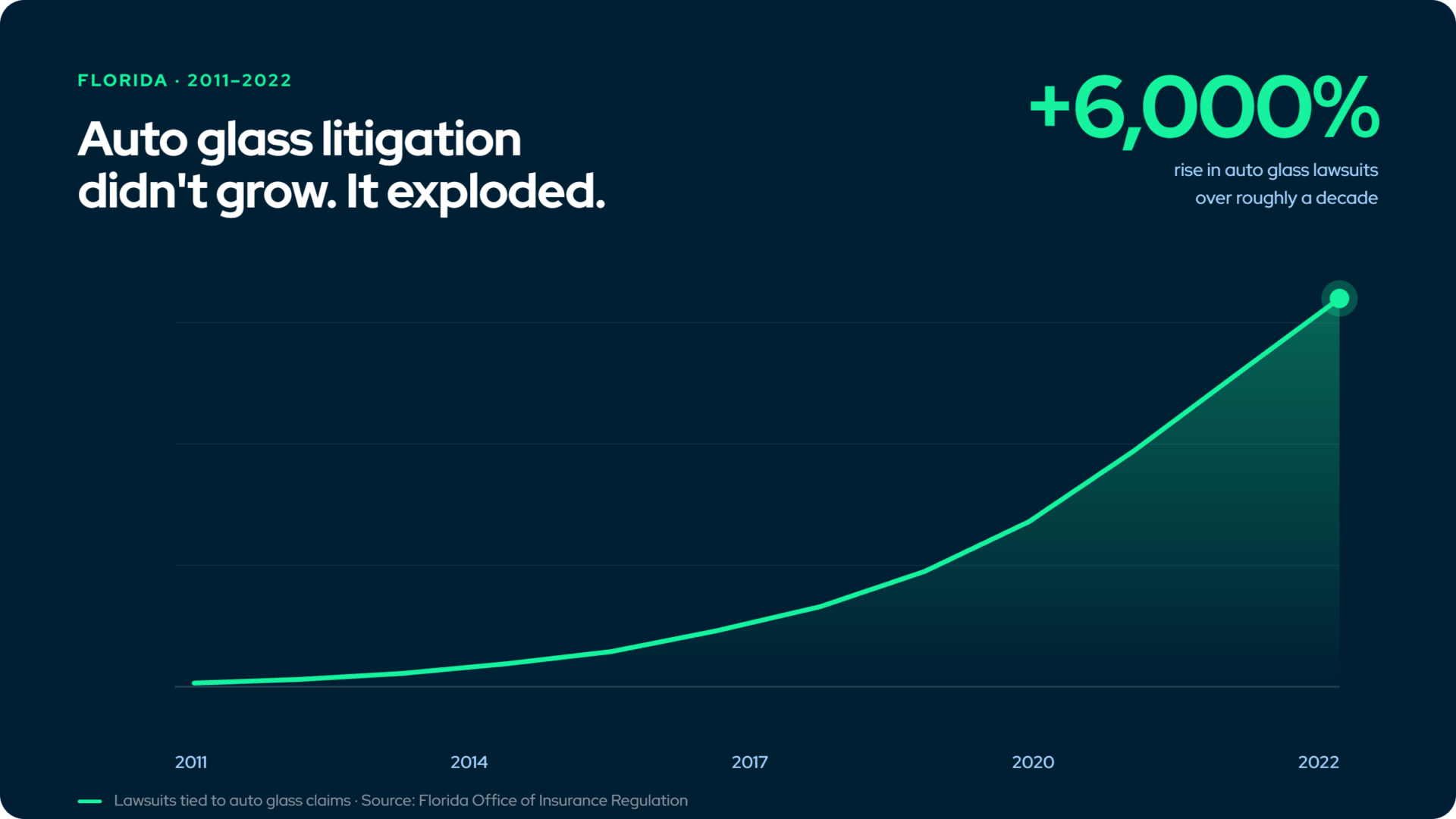
Quick answer: Florida auto glass litigation rose over 6,000% between 2011 and 2022, driven largely by Assignment of Benefits (AOB) agreements that let shops bill insurers directly and sue over disputed amounts. Florida’s 2021 legislative reform closed that specific loophole – but the underlying gap it exploited (unverified damage, scope, and billing) exists in any claims process without independent verification.
Key facts covered in this article:
- Florida auto glass litigation grew more than 6,000% from 2011 to 2022
- AOB agreements let shops bill insurers directly and pursue disputed claims through litigation
- Florida’s 2021 law restricted AOB transfers specifically for auto glass claims
- The underlying gap — unverified damage and billing — isn’t unique to Florida or to AOB structures
- Independent, VIN-based verification at first notice of loss closes the gap directly, rather than waiting for the next exploit to be legislated away
Between 2011 and 2022, lawsuits tied to auto glass claims in Florida grew dramatically — by some estimates, more than 6,000% over the decade. Eventually, lawmakers stepped in, and in 2021 Florida passed legislation restricting the practice believed to be driving much of the increase: Assignment of Benefits, or AOB, agreements tied to windshield claims.
It’s a striking example, and it’s worth understanding not as a story about one unusual state, but as a case study in what can happen when a gap in a claims process gets discovered and scaled — the kind of pattern SIU investigation teams are trained to watch for.
How Assignment of Benefits Worked in Practice
An Assignment of Benefits agreement lets a policyholder sign over their right to an insurance payout to a third party — commonly a repair provider — who then bills the insurer directly and can pursue payment, including through litigation, on the policyholder’s behalf.
How the AOB mechanism worked in practice:
- A shop offers an incentive to sign quickly — a free windshield, cash offer, or waived deductible
- The policyholder signs an Assignment of Benefits, transferring their claim rights to the shop
- The shop bills the insurer directly, sometimes at rates well above market
- If the insurer disputes the amount, the shop — now standing in the policyholder’s place — can sue
- Multiplied across a large claims volume, this became a significant driver of litigation in the state
The Florida Office of Insurance Regulation has published detailed data on the scale of this trend and the legislative response to it.
Why This Matters Beyond Florida
It’s tempting to read this as a story about a few bad actors exploiting a legal loophole in one state, and to some extent, that’s accurate. But the more useful lesson is about the underlying condition that made the loophole valuable in the first place: a claims process where damage, scope of work, and billing weren’t independently verified before payment.
That condition isn’t unique to Florida, and it isn’t unique to AOB arrangements specifically. Any claims process — anywhere — that pays out based on an invoice without an independent check on what the vehicle actually needed has some version of the same underlying gap. Florida’s version happened to combine with a legal mechanism that let it scale into a multi-billion-dollar litigation problem. Other versions of the same gap show up more quietly, in inflated line items or unnecessary add-ons that never make it to a courtroom at all.
Legislation Closes One Door. Verification Closes the Gap.
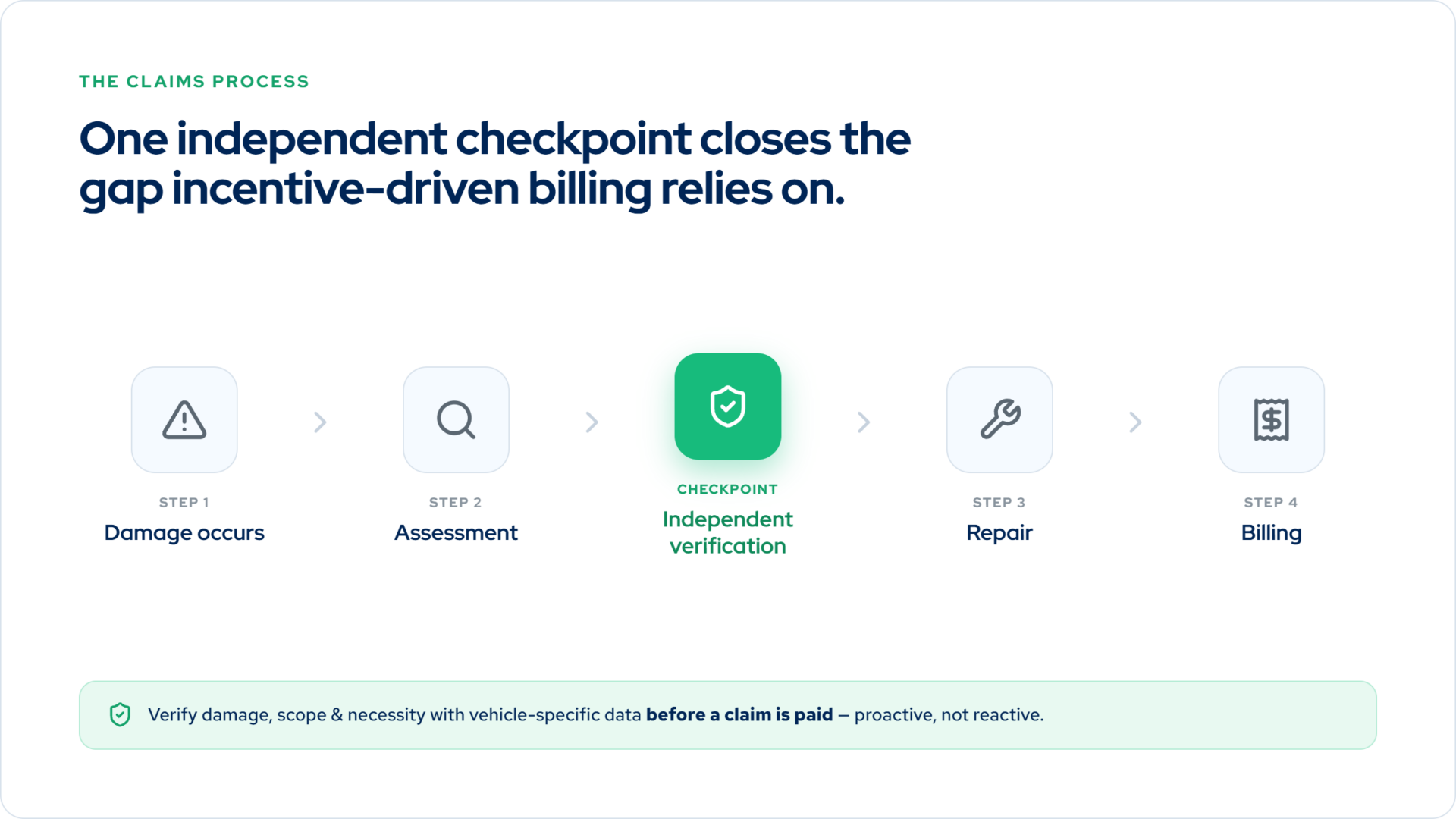
Florida’s 2021 reform addressed the specific legal mechanism — AOB transfers for auto glass claims — that had been driving the litigation surge. That’s a meaningful and necessary fix, but it’s also, by nature, reactive: it closes one door after a problem has already reached a large scale.
The more durable, proactive approach is to close the underlying gap directly, by verifying damage, scope, and necessity — including whether recalibration or other add-ons are genuinely required — before a claim is paid, using consistent, vehicle-specific data every time. That kind of independent check at first notice of loss doesn’t just prevent the specific pattern seen in Florida. It reduces the value of exploiting any gap between what a vehicle needed and what got billed. For more on how that verification step applies to specific line items like calibration, see our post on ADAS recalibration billing, or learn about our approach at drivex.ai.
The Takeaway
Florida’s insurers eventually got a legislative fix, but only after years of rising costs and litigation. Insurers who build independent, data-driven verification into their claims process from the outset don’t need to wait for the next version of the same gap to be discovered and scaled before addressing it.
Sources: Florida Office of Insurance Regulation, Insurance Information Institute